Antiques Trade Gazette - 29 August 2026
Isfahan to Islington: tiles ended up with 'almost legendary' dealer
Safavid examples from the Jack Webb collection find their latest homes after palace demolition
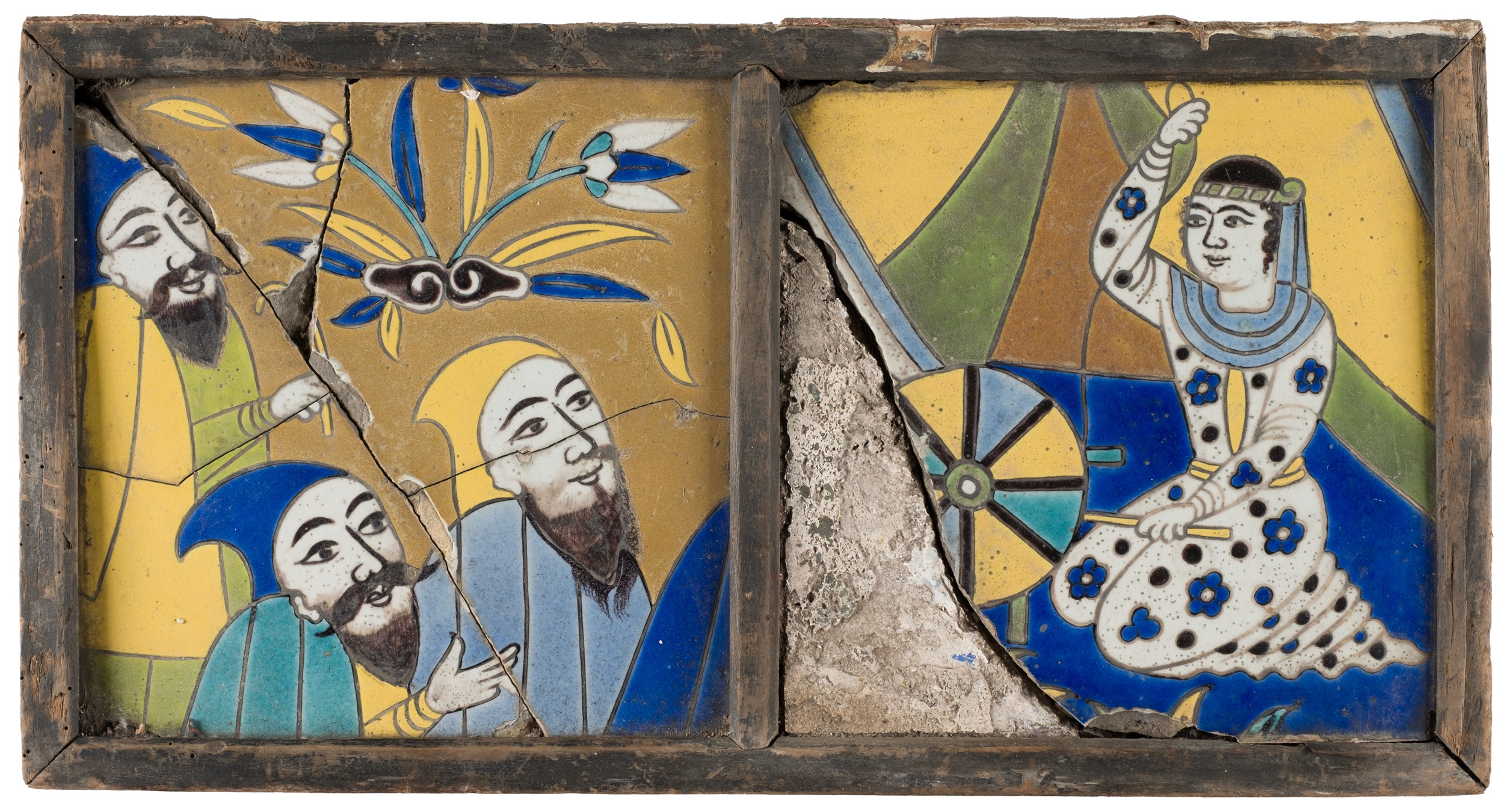
Two yellow ground Safavid cuerda seca tiles from the Tile Arcade in Isfahan, £20,000
The July 16 antiques sale at Dominic Winter (22% buyer’s premium) in South Cerney, Gloucestershire, included a group of four 17th century Safavid cuerda seca tiles from the collection of Jack Webb (1923-2019).
Webb, an almost legendary London antiques dealer, operated a shop in Camden Passage, Islington, for 70 years. Much of his eclectic collection was sold by Dominic Winter and Noonans of London in 2020.
Firing the imagination
The cuerda seca (dry cord or kashi) technique of decorating tiles was developed in central Asia during the latter part of the 14th century. The process used a grease to draw the pattern and delineate ‘cells’ for vibrantly coloured glazes. When the ‘resist’ evaporated during firing, it left a pleasing dark brown outline around the design.
The 9in (23cm) tiles offered here, decorated in hues of yellow, apple green, cobalt blue, turquoise, lavender, ochre, white and black, would seem to originate from the so-called Tile Arcade created in Isfahan c.1685-95.
The pictorial tiles from this architectural masterpiece were salvaged by local dealers during the demolition of the urban palaces in the late 19th century and subsequently dispersed in collections around the world.
Recently, scholars Lisa Golombek and Robert Mason, authors of Princes, Dervishes and Dragons: The Tile Arcade from Safavid Isfahan (2025), digitally reassembled the 36 friezes covering three themes: secular pastimes (picnics, hunt, games), Persian literary episodes, and (in a break from Islamic artistic norms) religious festivals. As the scenes were paired across a courtyard, at least two versions of each tile were created.
Two tiles (pictured above) with a yellow ground presented side by side in an old wooden frame showed, respectively, three bearded men with a spray of tulips and a woman in a floral dress kneeling with a spinning wheel and thread. The first, thought to depict Armenian clerics and a Muslim Shah celebrating the founding of a church, are the subject of another panel held by the Louvre-Lens Museum.
The second is similar to another in a frieze held by the Museum für Islamische Kunst in Berlin.
Offered together with a guide of £3000-4000, they made £20,000.
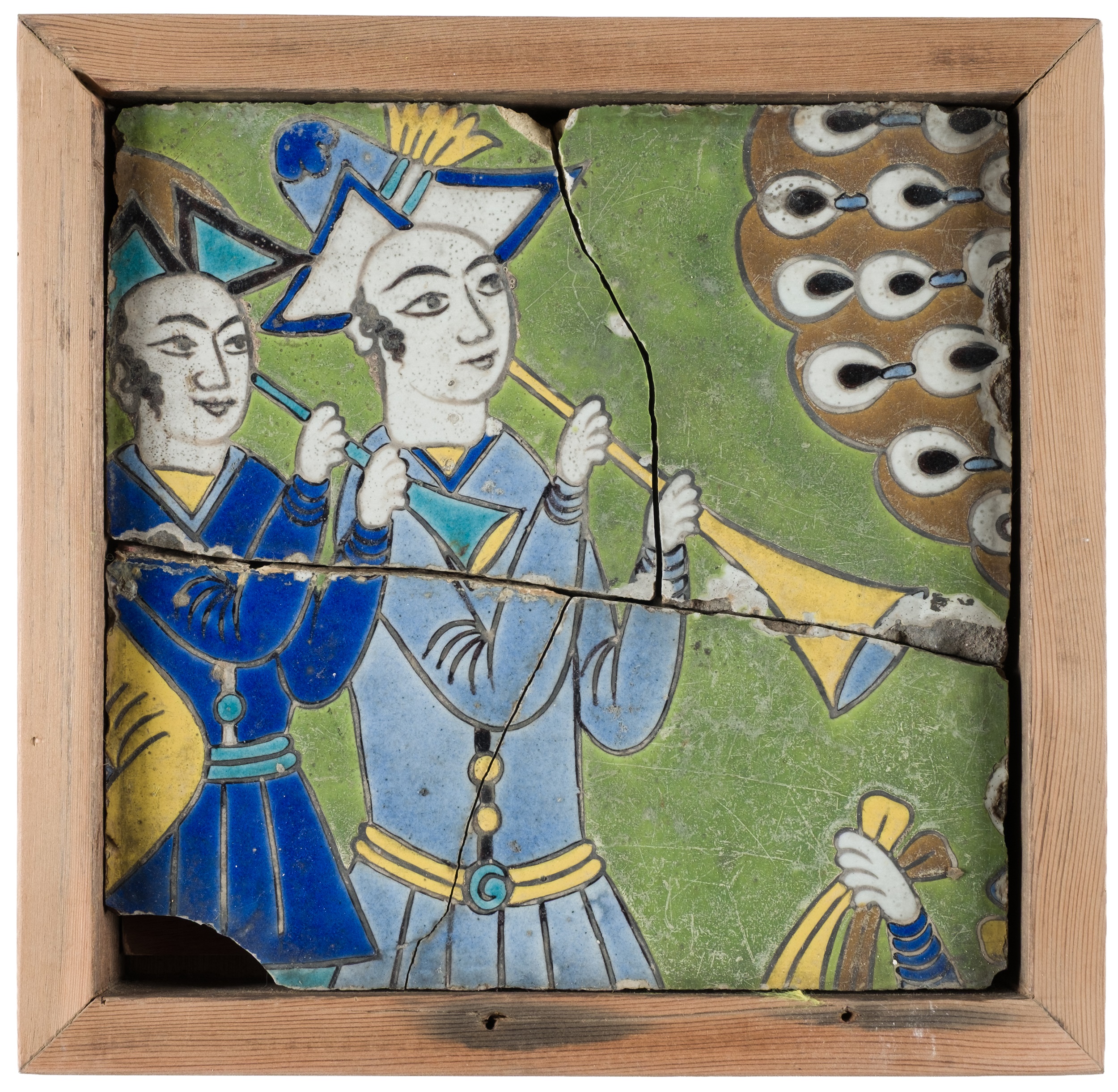
Apple green ground Safavid cuerda seca tile from the Tile Arcade in Isfahan, £20,000
A third tile depicting two musicians with split brim hats and trumpets against a green ground also took £20,000, despite breaks and losses. It may be a missing tile from a religious frieze showing Women Dancing at a Sacred Tree.
The Museum of Islamic Art, Doha, purchased elements of this tile arch from the sale of the Theodor Sehmer collection at Christie’s in April 2004. The museum also purchased two conjoined tiles of the dancers on a blue ground at Christie’s in October 2014 for £38,000.
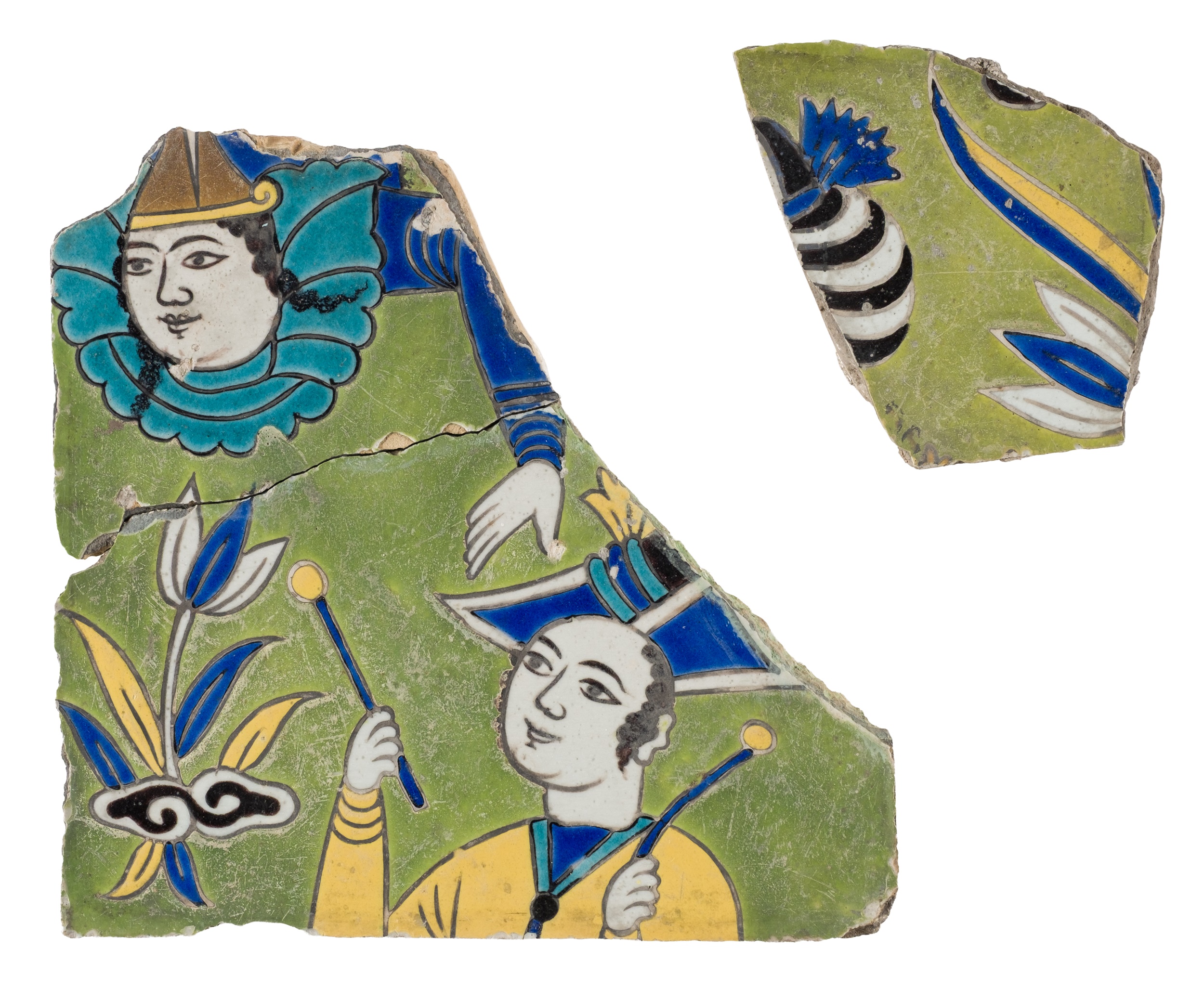
Fragmentary green-ground Safavid tile together with a separate fragement, £9,000
A fragmentary fourth green-ground tile, depicting a drummer in a similar attire and the head and arm of a female acrobat (also from Women Dancing at a Sacred Tree) was offered at Dominic Winter together with a separate fragment showing part of a striped turban (perhaps from one of the secular friezes). It took £9000 (estimate £2000-3000).
First Mary Rose finds
 Piece of wood recovered from the Mary Rose in 1836, £1,600
Jack Webb’s interest in art and antiques went way beyond the militaria for which he was best known.
Also from the collection was a 3 x 4in (8 x 10cm) piece of wood recovered from the Mary Rose – not during the late 20th century excavations but during the reign of William IV.
A label from 1843 reads: This portion of the Tall Ship Mary Rose was recovered from the wreck by diving apparatus 1836. That year fishermen from Gosport reported snagging their nets on something on the seabed of the Solent.
Henry Abbinett, a pub owner, investigated their claims and from June 16-18 brothers John and Charles Deane and Will Edwards, divers who had recently patented a deep-sea helmet, located the wreck and recovered several timbers and a bronze cannon. This fragment was guided at £100-150 but hammered for £1600.
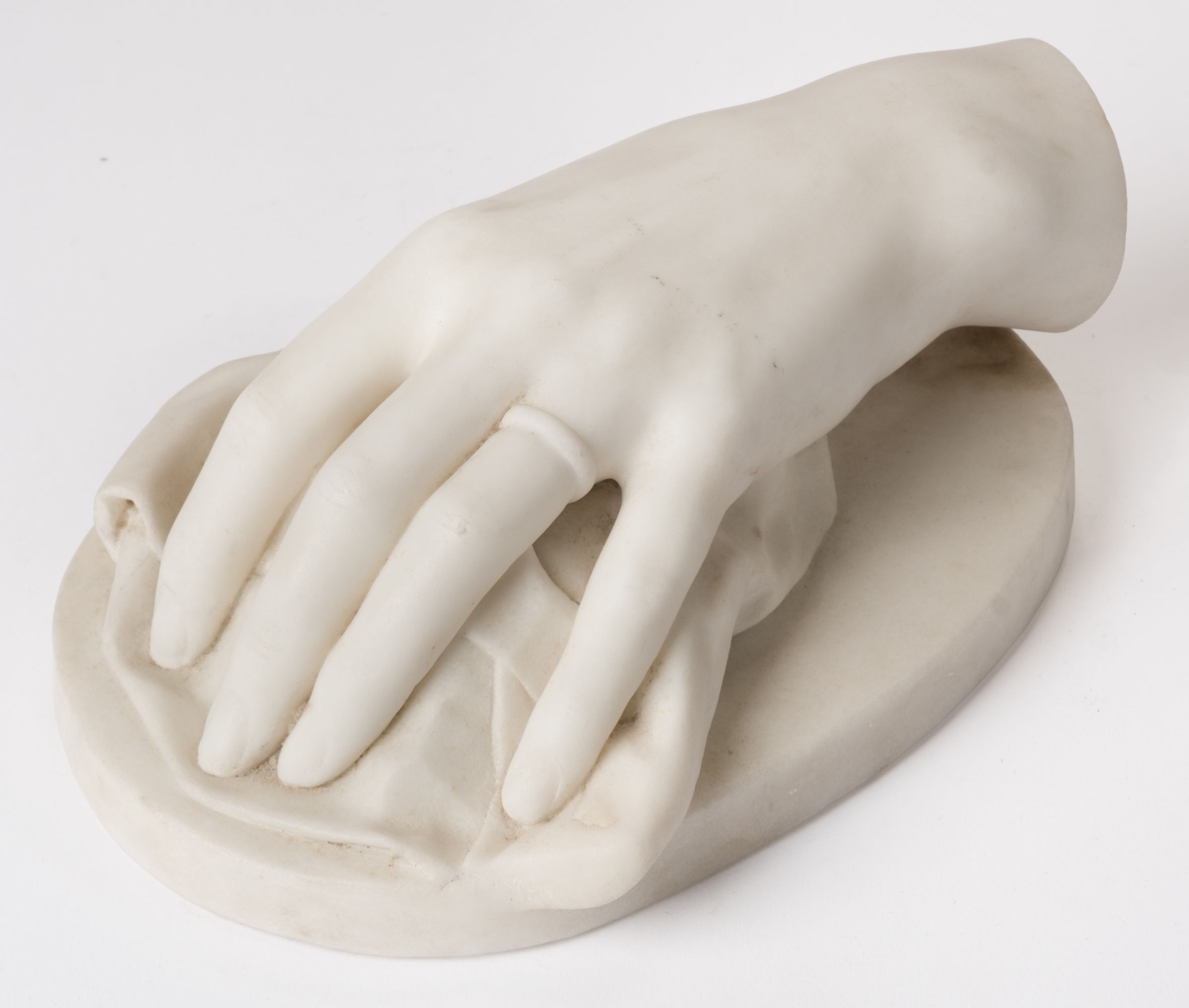
White marble momento mori sculpture, £2,000
Also from the Webb collection, sold at £2000 was a mid-19th century Italian white marble momento mori sculpture, c.1850, exquisitely carved as a lady’s left hand resting on a cloth, while a Victorian dummy board in the form of a cat with a manuscript label to verso inscribed Frank Paton 1884 took £3800.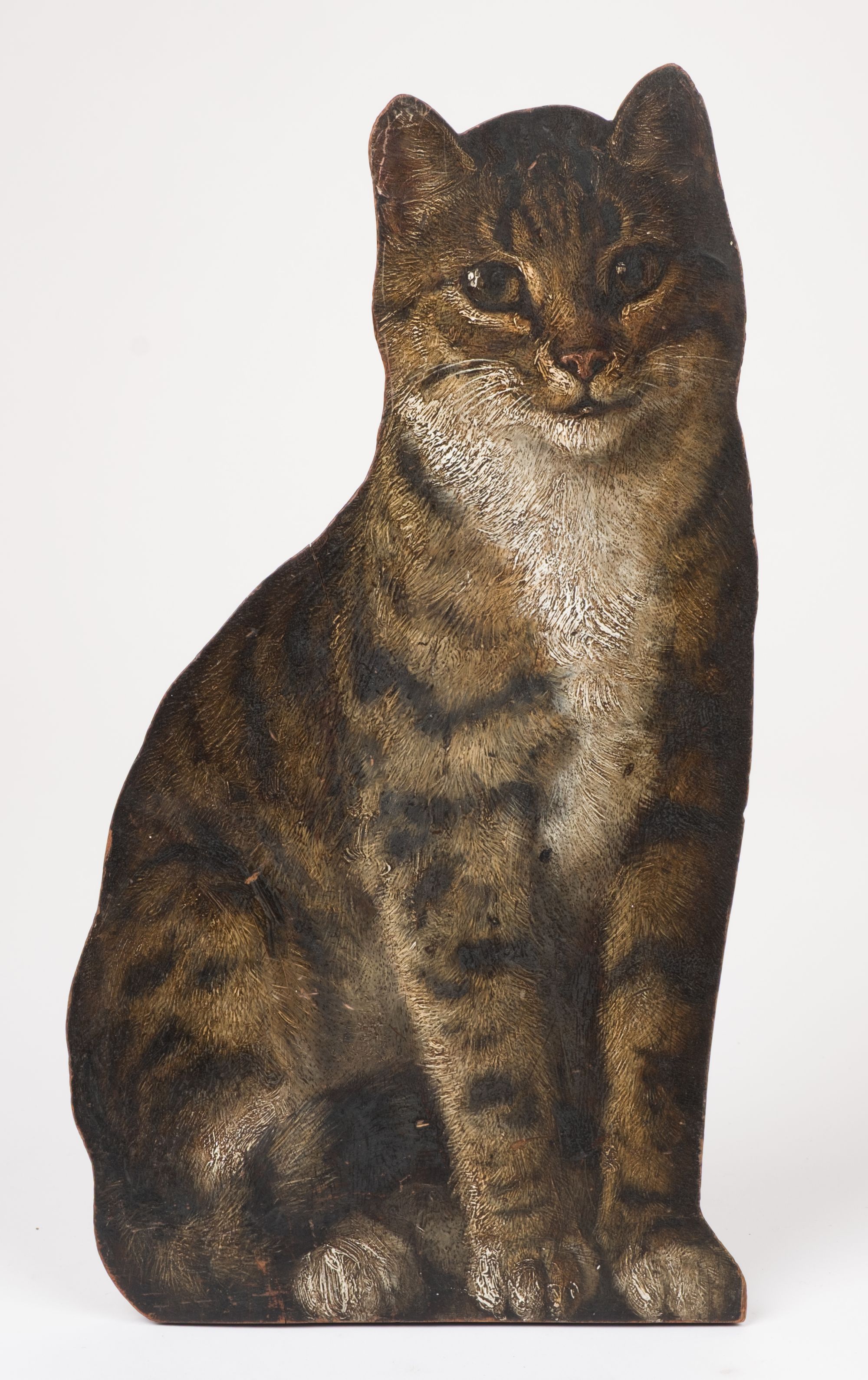
Victorian cat dummy board decorated by Frank Paton, £3,800
Paton was a genre and animal painter whose work was often engraved. He exhibited several paintings at the Royal Academy and other principal London galleries from 1872.
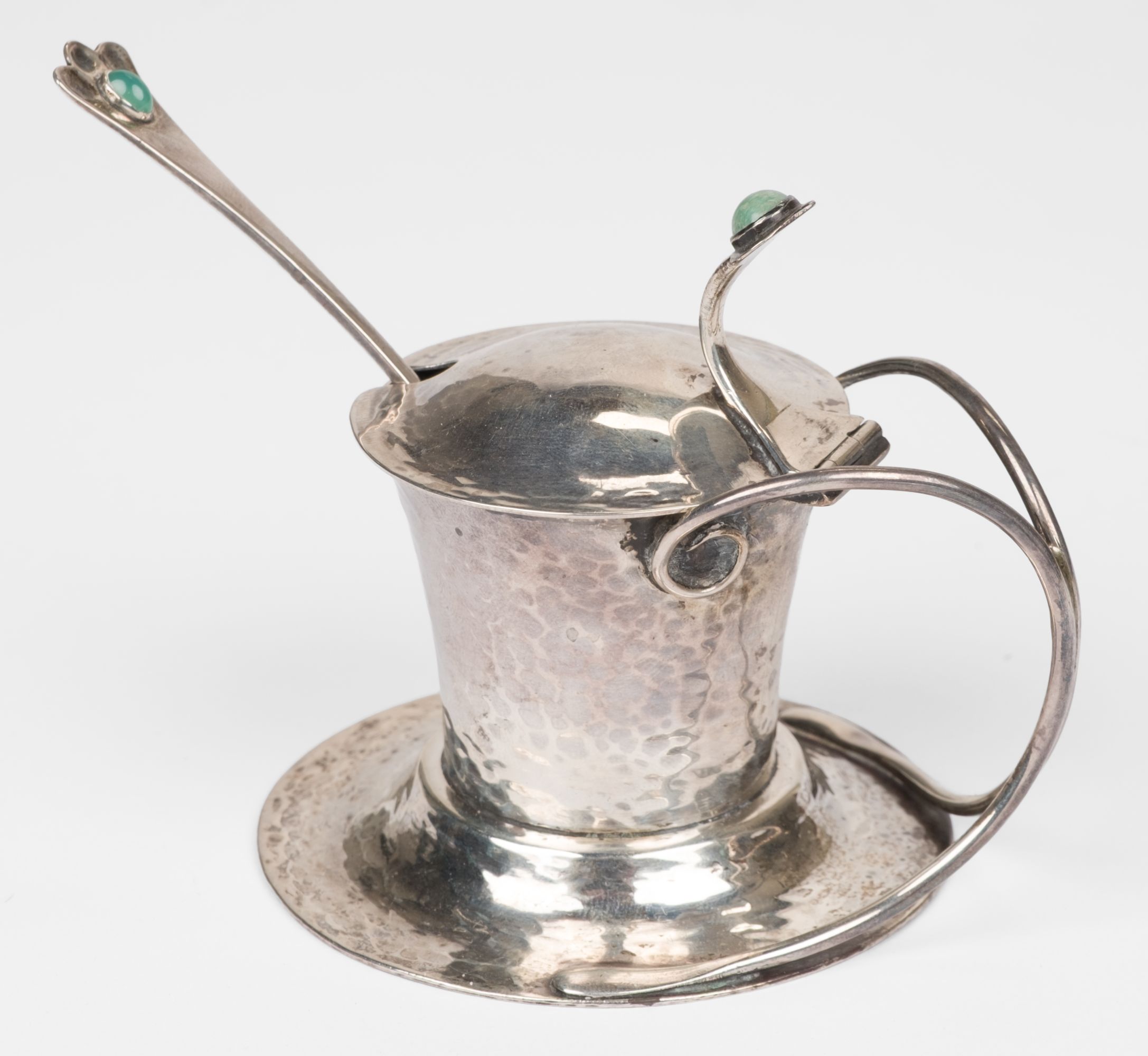
Arts & Crafts silver mustard pot and spoon by Charles Robert Ashbee, £3,600
Collectors of mustard pots and Arts & Crafts silver will have both admired a Charles Robert Ashbee (1863-1942) silver mustard pot and spoon with hallmarks for the Guild of Handicraft, London, 1905. Made in the classic Ashbee style with the wirework handle and thumb piece set with chrysoprase cabochon gems, it went above its top estimate at £3600.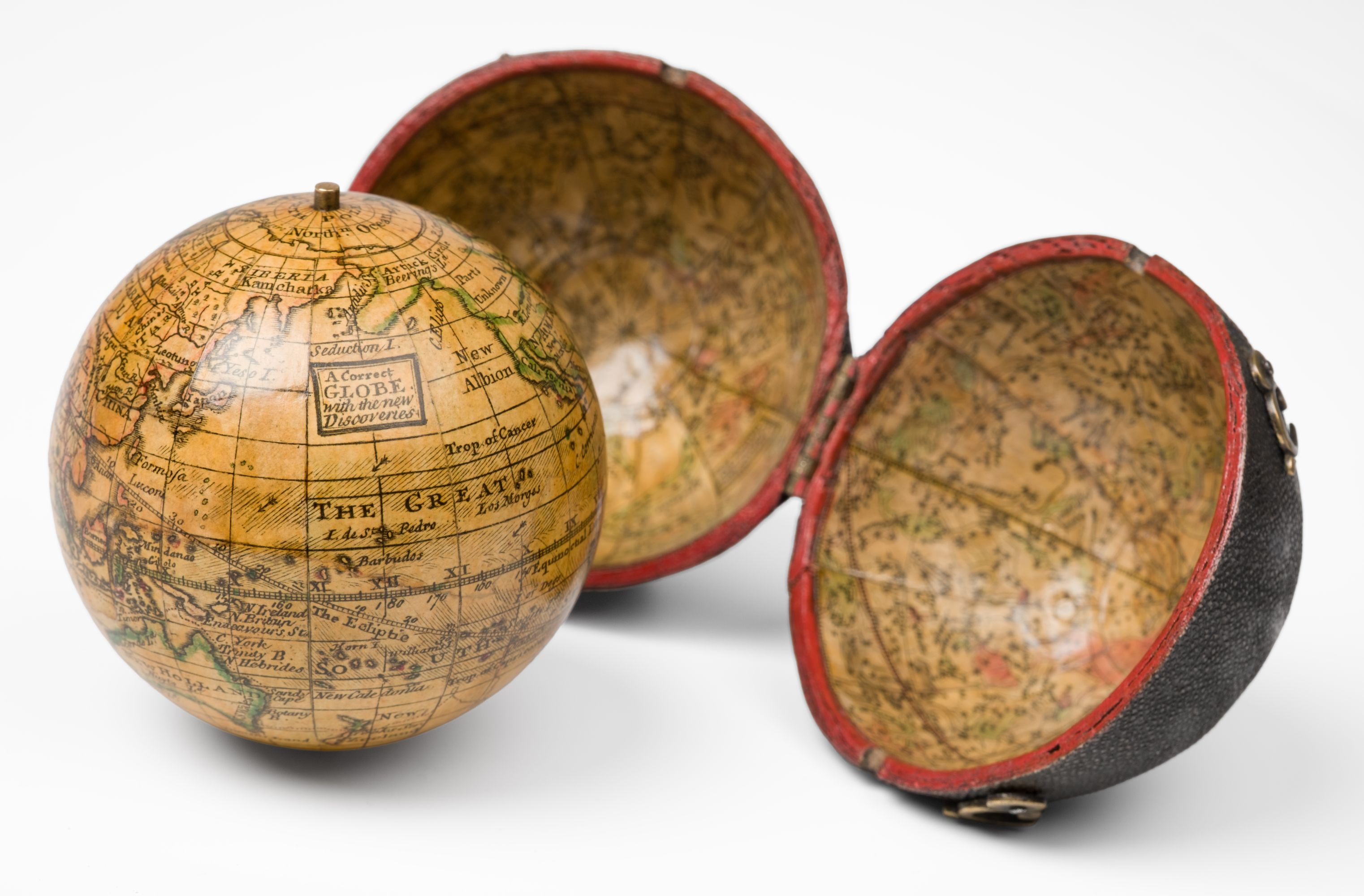
A Correct Globe with ye new Constelations of Dr Halley, £3,000
Pocket globes have bought some substantial sums of late. Here an example by George Adams of 60 Fleet Street, London, c.1785, in a contemporary ray skin case with internal celestial gores, took £5600. An anonymous English pocket globe of the same period with papers titled A Correct Globe with ye new Constelations of Dr Halley hammered for £3000.
The latter was formerly a type attributed to George Adams but is now deemed an updated and adapted version of the pocket globe published by Herman Moll earlier in the 18th century.
Textiles focus
Under specialist Susanna Winters, Dominic Winter is one of the few auction houses in the UK specialising in a broad range of textiles.
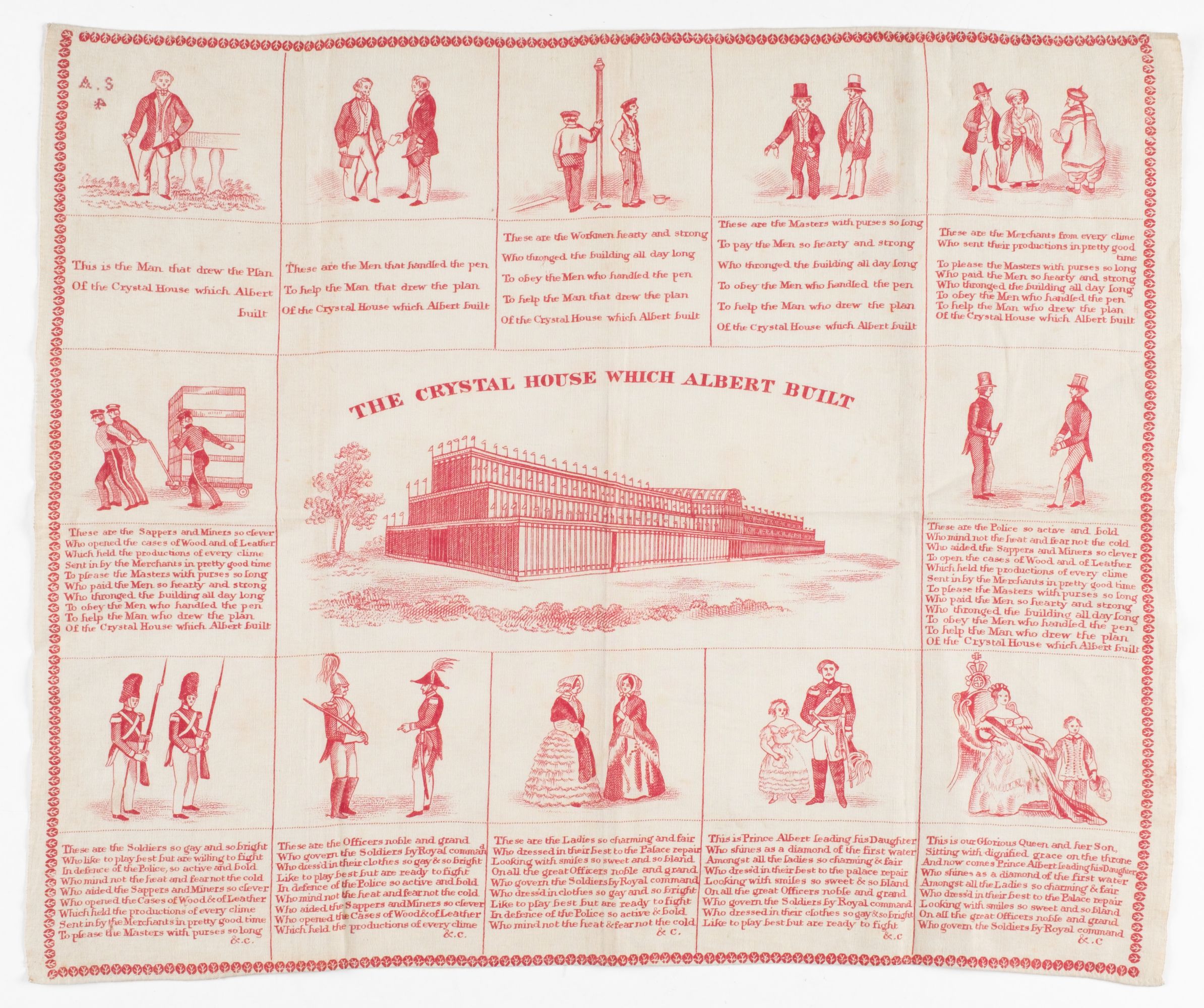
The House That Albert Built, a handkerchief marking the building of the Crystal Palace, £600
A rare commemorative handkerchief celebrating the building of the Crystal Palace in Hyde Park for the Great Exhibition of 1851 sold at £600. The 12 accompanying verses follow the format of the nursery rhyme This Is the House That Jack Built, the first verse beginning This is the Man that drew the Plan of the Crystal House which Albert built, and the last starting This is our Glorious Queen and her Son, Sitting with dignified grace on the throne. It measures 16 x 20in (42 x 51cm).
In bright and robust condition, the hankie was offered together with a Royal Opera Covent Garden printed silk programme, titled State Performance to Commemorate the Sixtieth Anniversary of Her Majesty’s Accession to the Throne, dated Wednesday June 23, 1897.
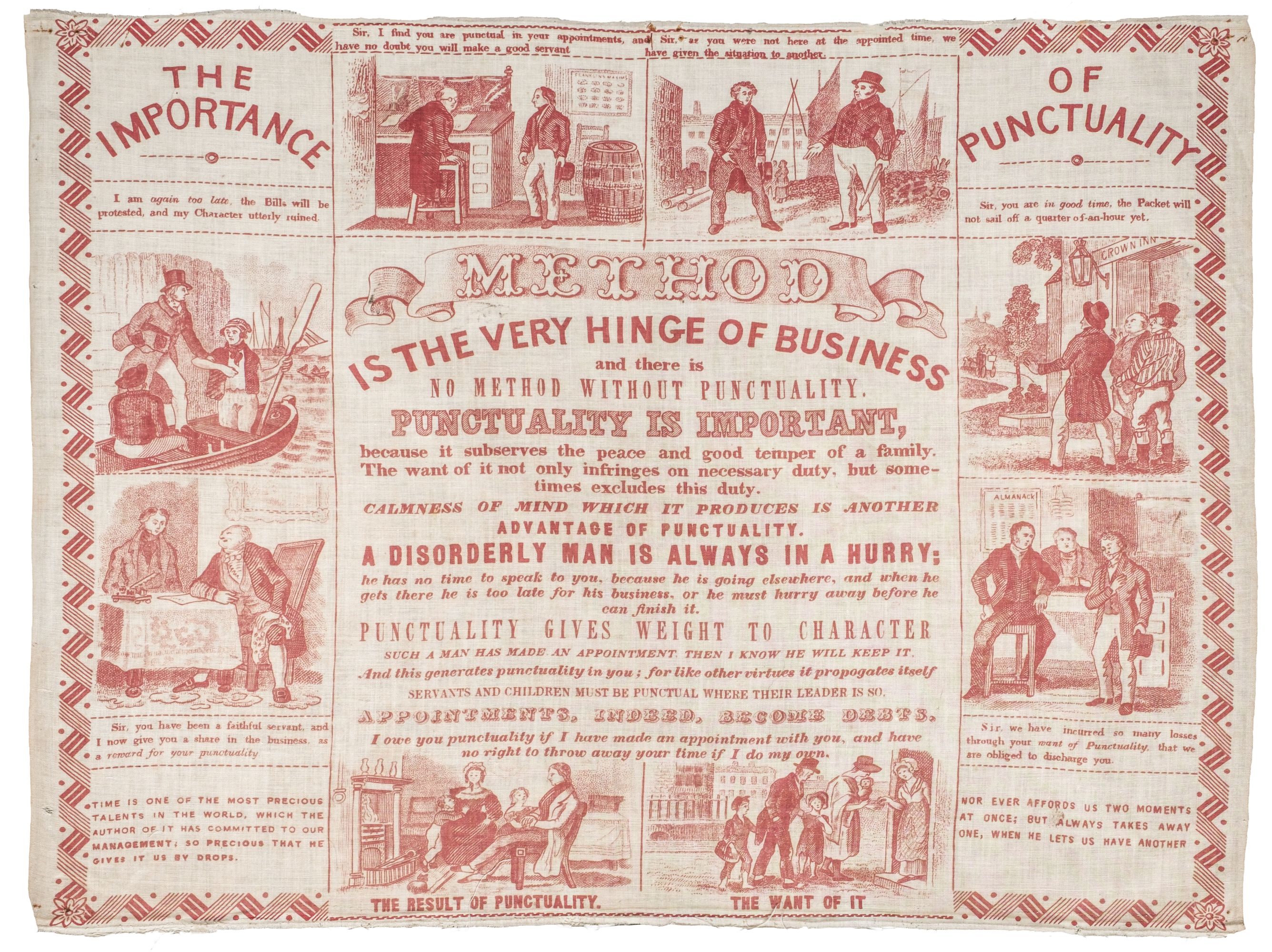
Handkerchief titled The Importance of Punctuality, £440
A similar handkerchief titled The Importance of Punctuality sold at £440. Eight scenes extol the virtues of precise timekeeping which ‘subserves the peace and good temper of a family’, producing ‘calmness of mind’ and ‘weight of character’. The auction house had been unable to trace another sold at auction.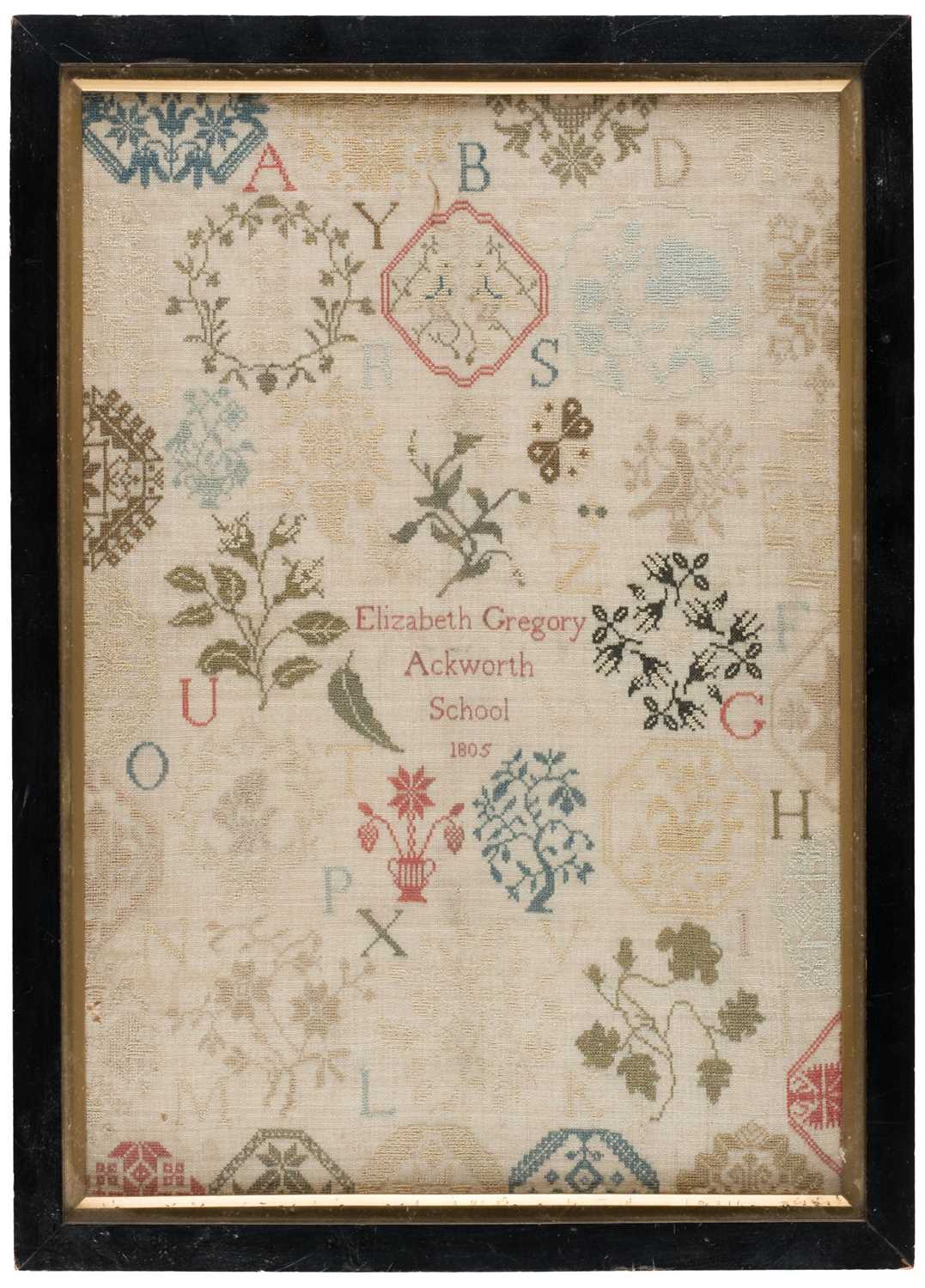
Ackworth School medallion sampler by Elizabeth Gregory, £2,000
An Ackworth medallion sampler – a type almost unique to the Quaker school of Ackworth, near Pontefract – sold at £2000. Measuring 16 x 11in (41 x 28cm), it displays a typical array of pictorial motifs (a swan, a tree, a floral urn, stars and roses) together with the letters of the alphabet and name Elizabeth Gregory Ackworth School 1805. In relation to previous prices, it was not expensive at the low estimate.
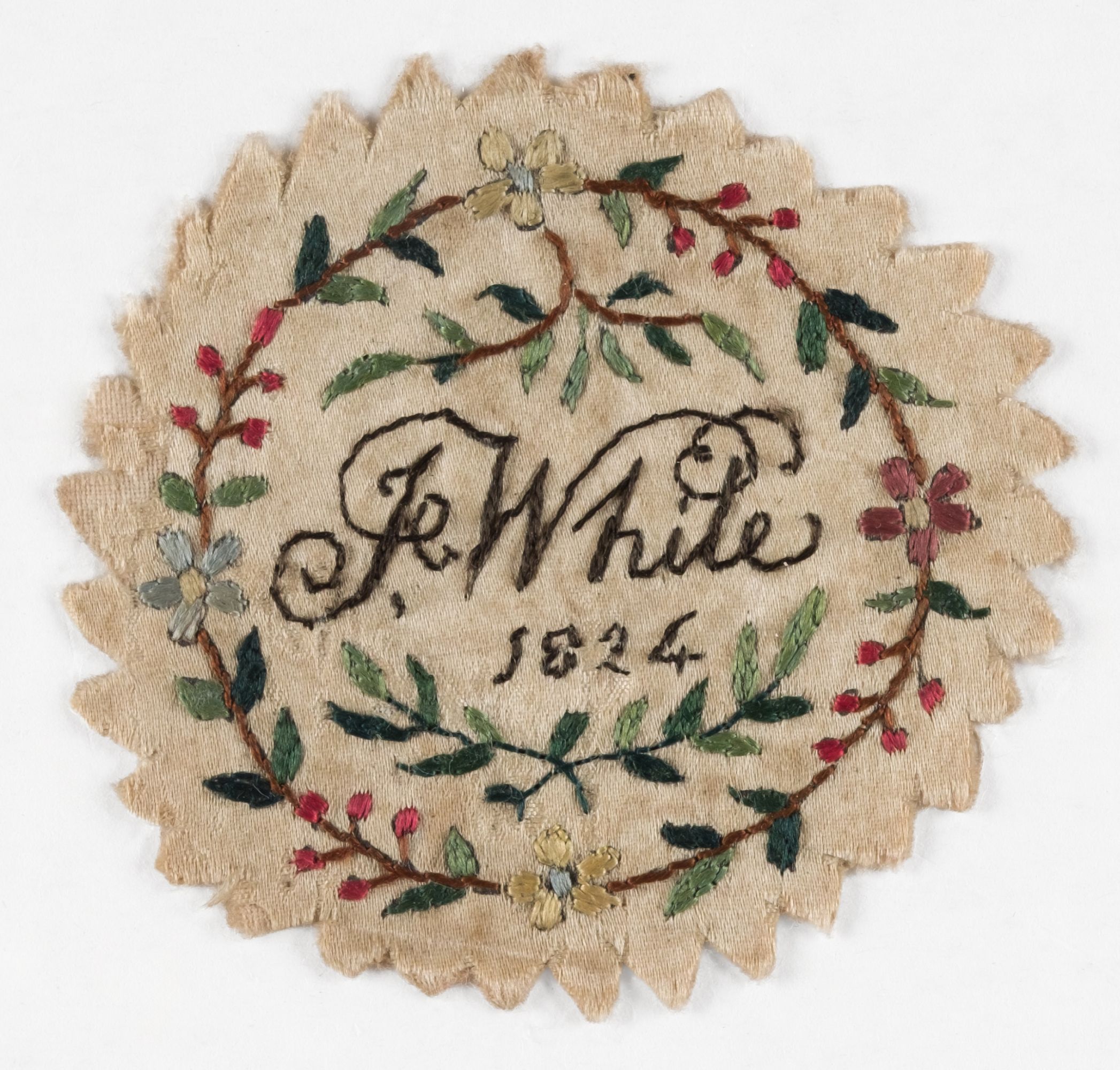
Embroidered pocket watch sampler dated 1824, £1,050
There was more competition for a diminutive, embroidered pocket watch sampler, made by a loved one in the reign of George IV to fit inside the case of a verge watch. Stitched by J White with the date 1824 and a floral wreath, it made £1050 (estimate £300-500).
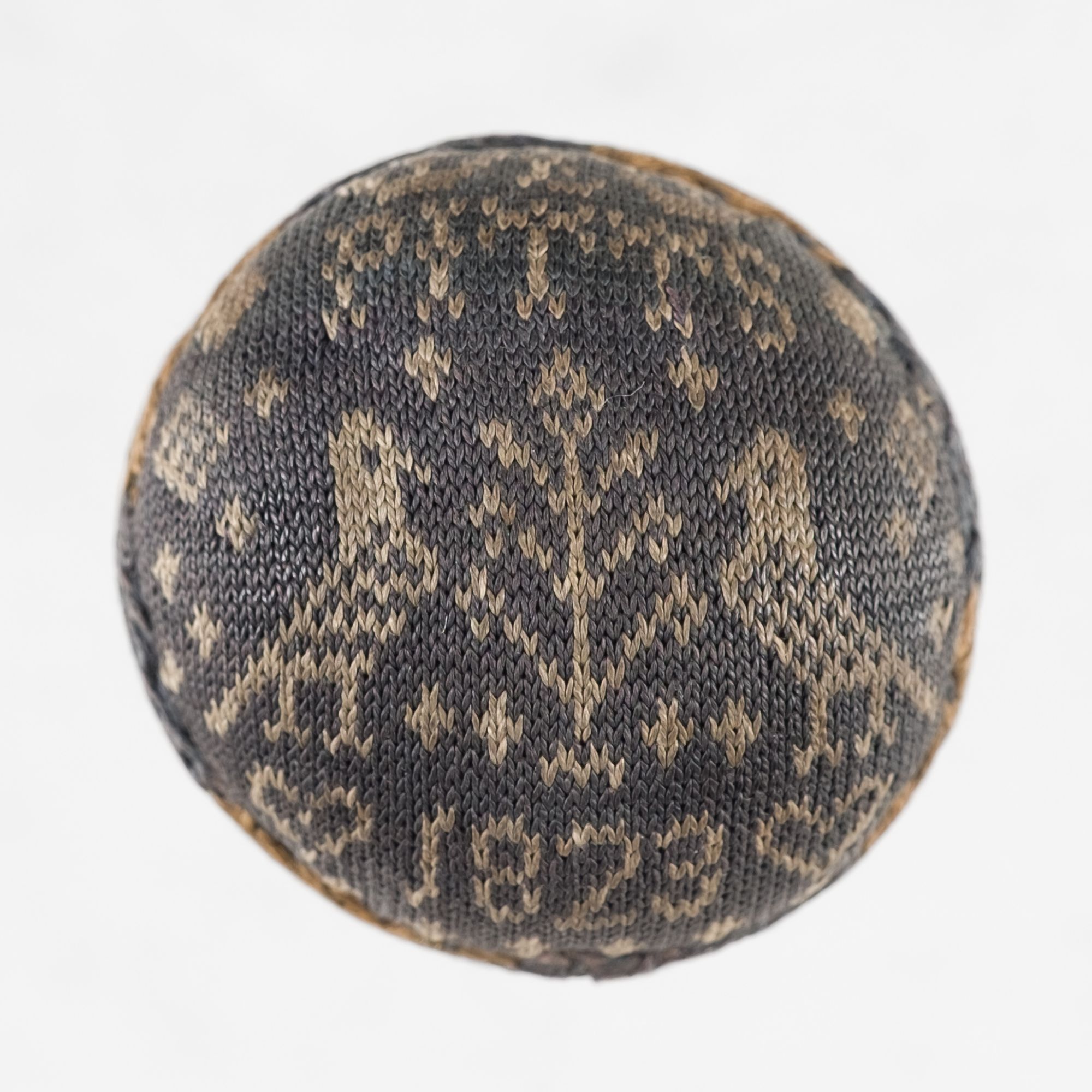
Valentine knitted pin ball, dated 1823, £2,200
A group of four knitted pin balls were led at £2200 by the example in tan and dark blue thread worked to one side with the name E Pitts and the date 1823 beside a pair of birds and to the others with the legend Good Morrow Valentine February 14. It was the only one of its kind the auction house could find.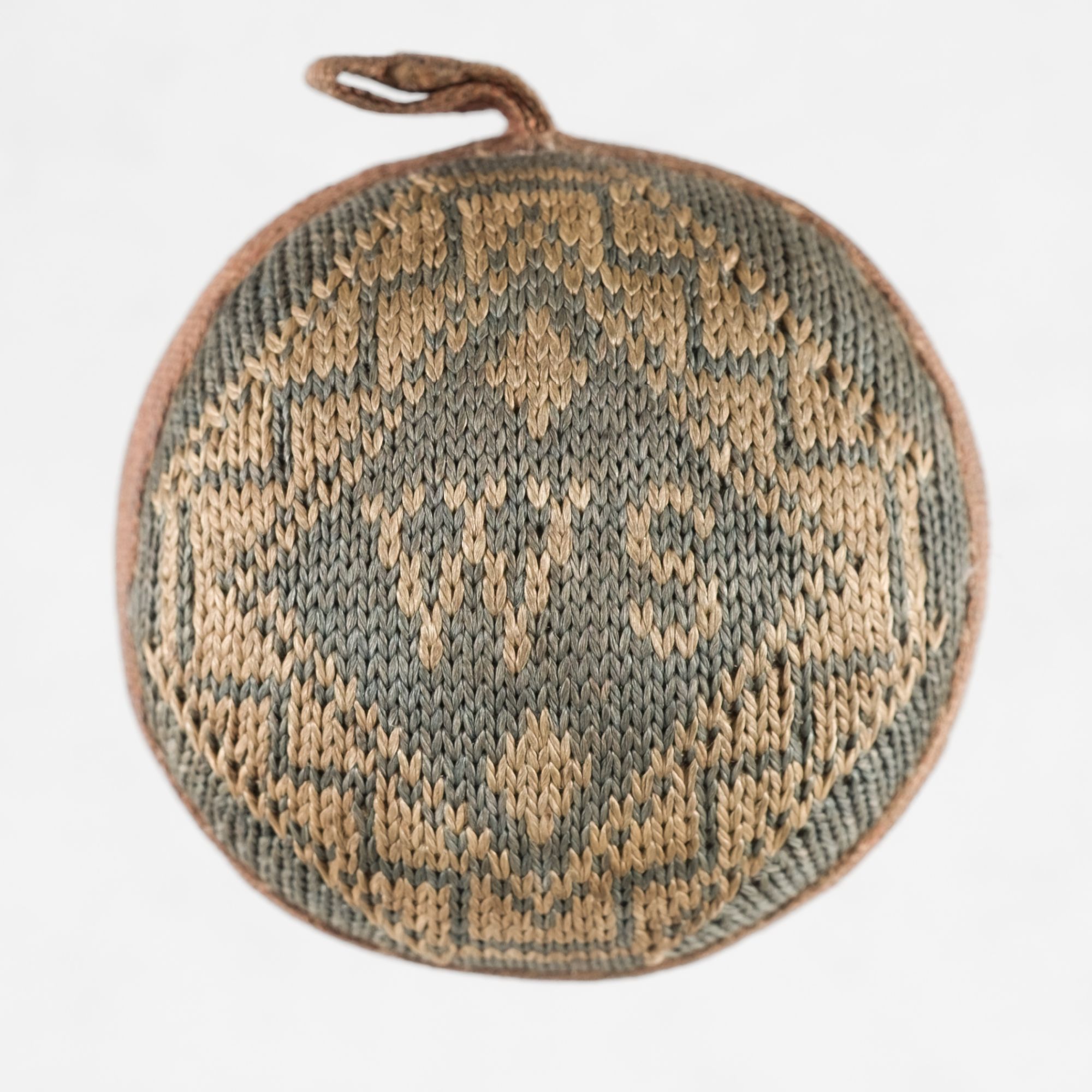
Early 18th century knitted pin ball dated 1717, £1,300
A particularly early example was worked in cream on a ground of tan thread on one side, with the initials SC and date 1717, and in cream on a grey to the other side, with the initials WS. It sold at £1300.
In April 2025 a similar pin cushion inscribed From the Retreat near York sold for a remarkable £14,000 at Woolley & Wallis of Salisbury. The Retreat, a purpose-built hospital for the mentally ill, was first proposed by the York tea merchant William Tuke at a local meeting of the Society of Friends in March 1792.
It is thought that these emotive needlework souvenirs were made both by patients as a kind of occupational therapy and by Quaker girls and women to raise funds.
Upcoming Auctions
Printed Books, Maps, Bibles & Fine Bird Books Witchcraft, Spiritualism & Early Cookery
To see a page-turning version of our catalogue, please see the Virtual Catalogue.
Live bidding is available on our website on sale day; a BID LIVE button will appear 60 minutes before the sale starts. Please register at least 24 hours before the sale starts. Commission bids can be left on our website up to 1 hour before the sale commences. For telephone bids, please call the office on 01285 860006.
DAY ONE
Travel & Exploration 1-36
The Library of David & Tamara Talbot-Rice 37-77
British Topography 78-100
Fine Bird Books from the Library of David Clugston: Part I 101-151
Natural History 152-165
Antiquarian History & Literature 166-334
Witchcraft, Spiritualism & Esoterica 335-357
Art & Design Books from the Library of Oliver Messel 358-366
Art Reference & Architecture 367-410
DAY TWO
Maps 411-506
Decorative Prints 507-588
Cookery Books: A Private Collection 589-605
General Literature 606-661
General Stock 662-729