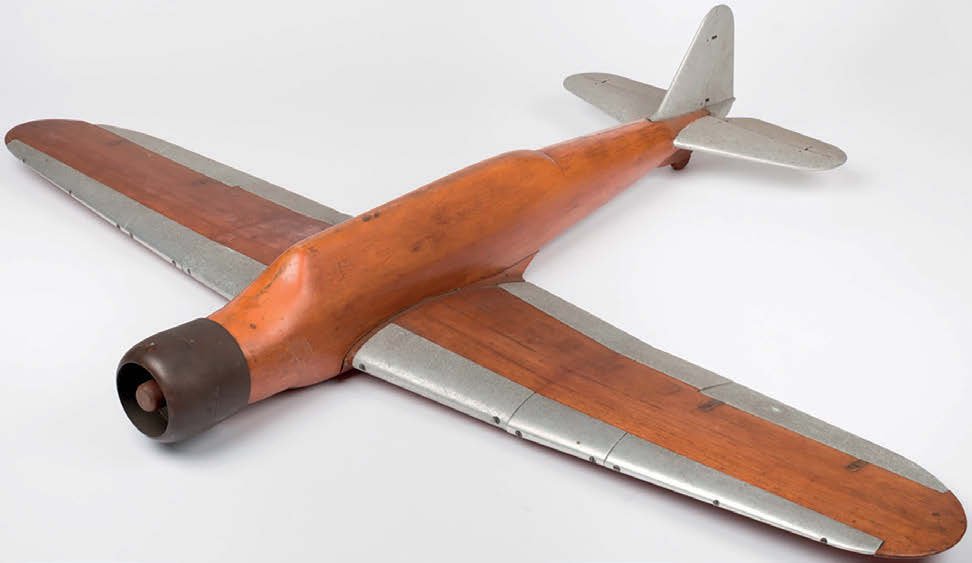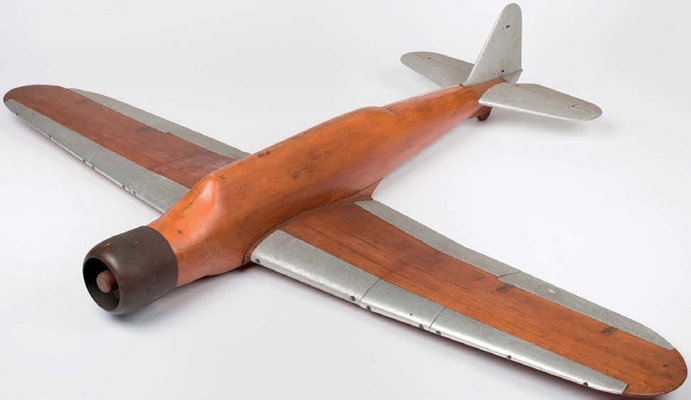
Wind tunnel model of Fairey N.8/39, £9000
Museum deaccessions can be controversial. Back in 2014, Northampton council faced criticism for selling an Egyptian sculpture from the Old Kingdom (c.2400-2300BC) at Christie’s evening Exceptional auction which brought in a hammer price of £14m but was deemed by many to be the collection’s jewel in the crown.
It was sold to help fund an extension to Northampton Museum and Art Gallery (although the sale’s proceeds were to be be shared with Lord Northampton, whose family presented the statue to the museum in 1880). Others felt it too high a price to pay in terms of selling off a key item, however, while some decried the sale of ancient Egyptian cultural artefacts.
This can be an emotive issue of course – involving donations made, often from family collections, with the idea that they will be kept in perpetuity for the benefit of all.
However, while some deaccessions gather headlines, others happen all the time and go under the radar as institutions quietly sell items that would be probably gathering dust in storage. They would argue that the proceeds can also fund acquisitions of what they see as more relevant items.
Whether it is justified as museum and gallery fashions wax and wane is another matter of course – the success to be judged by visitor numbers, presumably.
What is certain is that deaccessions can bring material onto the market that would otherwise be unobtainable.
Moving on
The May 21-22 Military & Aviation History, Medals & Militaria sale at Gloucestershire auction house Dominic Winter (22% buyer’s premium) was a case in point.
Nearly 70 lots had the catalogue note “Provenance: The Royal Air Force Museum”.
It added: “The RAF Museum [in Hendon, north London] is carefully refining its collection to ensure it remains relevant, sustainable, and accessible. Items included in this auction have been assessed, and advertised for gifting to other heritage organisations, in line with our Acquisitions & Transfers Policy and recognised sector standards. Without an alternative home these items are now being made available for sale to support the ongoing care and development of our collection.”
Something in the air
The museum has been active in recent years buying items. For example, in 2022 it acquired the medal group awarded to the last surviving RAF pilot of 617 (Dambuster) Squadron to attack the German battleship Tirpitz, sold to the RAF Museum for an undisclosed sum via a sale arranged by London auction house Dix Noonan Webb.
Earlier this year it was revealed that the museum had purchased two preparatory drawings for major wartime paintings by Walter Thomas Monnington (1902-76), from a Roseberys auction in September 2025.
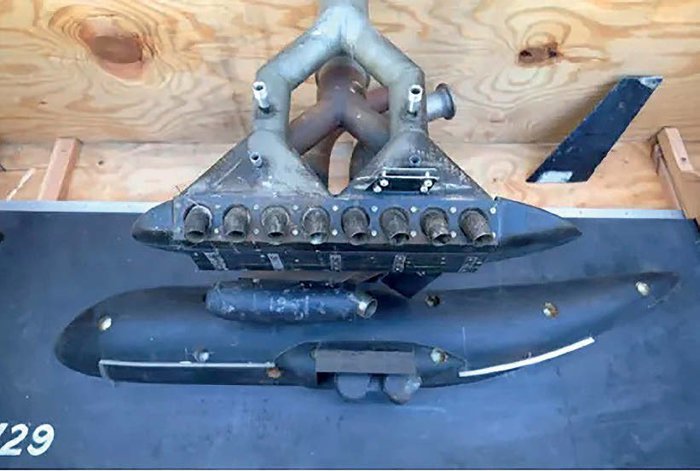
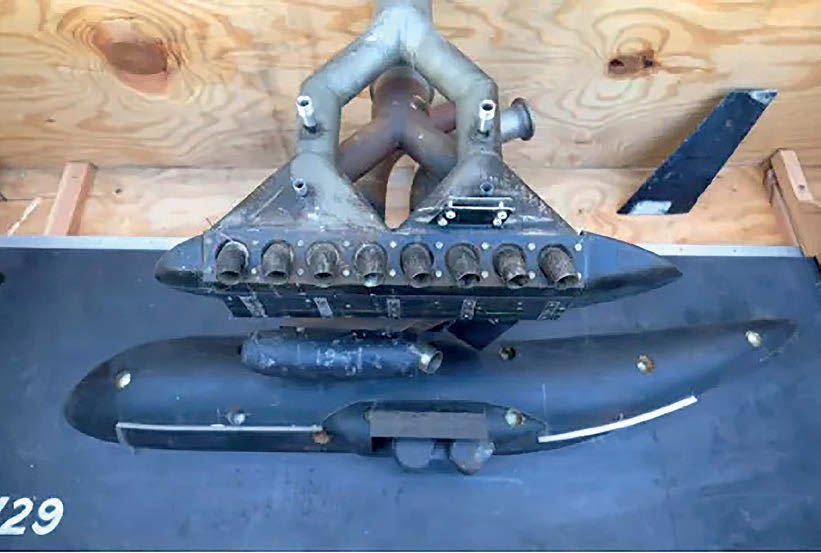
De Havilland DH 129 Vectored Thrust Model, £13,000
At Dominic Winter, a particularly popular group of RAF Museum lots related to wind tunnel models. It may not have been much to look at, but a De Havilland DH 129 Vectored Thrust Model estimated at £700-1000 hammered at £13,000.
The 6ft 1in (1.85m) long blackened wood and metal construction mounted on aluminium, inscribed in white painted lettering DH 129, came with a receipt from Model Shop Woodford to Wind Tunnel Models dated 1989. It was contained in a large wooden transport crate.
Also simple in outlook but desirable enough to take £9000 (estimate £700-1000) was a large carved wooden and alloy wind tunnel model of Fairey N.8/39, a folding-winged four-cannon naval fighter with radial engine and long crew canopy, alloy tailplane and wing leading/trailing edges, wooden fuselage and wing centre. This had a provenance to the Fairey Factory at Hayes. The Fairey N.8/39 was an unbuilt naval fighter project offered with four engine options and four wing-mounted cannon.
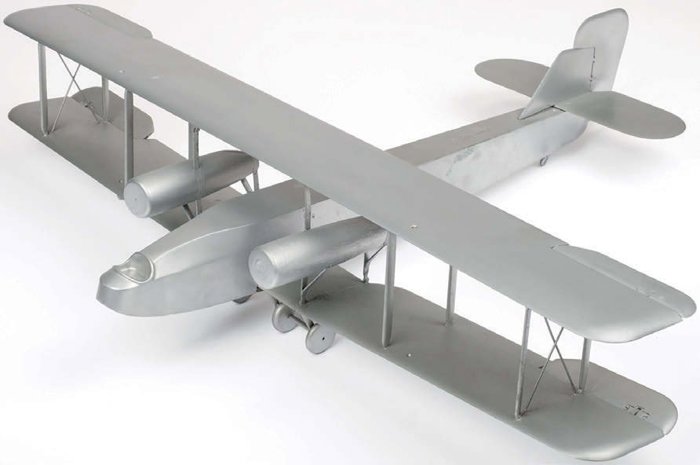
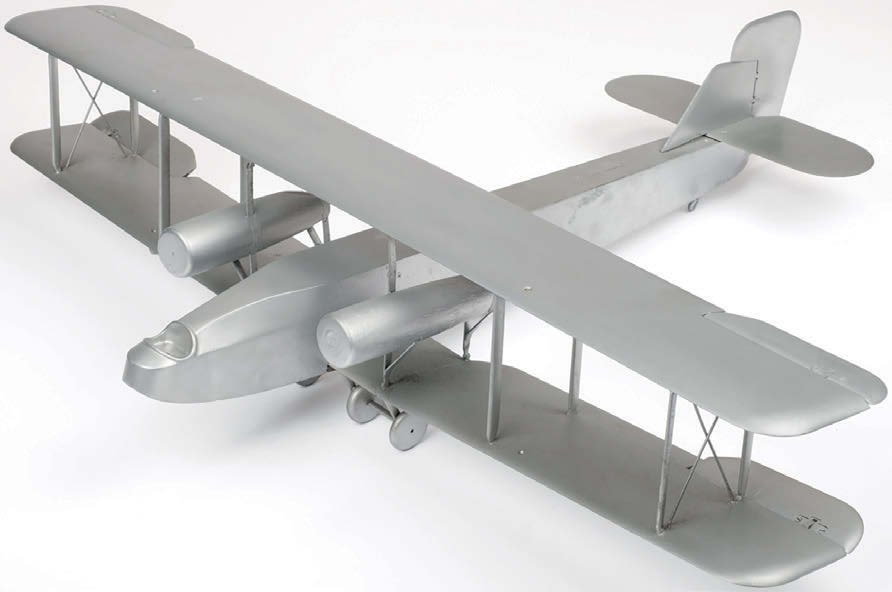
Wood and metal model of a Handley Page H.P.18 W8, £2200
More aesthetically pleasing to the eye, a “fine” wood and metal 1/30 scale model represented a Handley Page H.P.18 W8 twin-engined medium-range biplane, later painted silver throughout,, inscribed F63 on the fuselage, 2ft 6in (76.5cm) wingspan, 2ft 1in (64cm) long. This made £2200 against a guide of £700-1000.
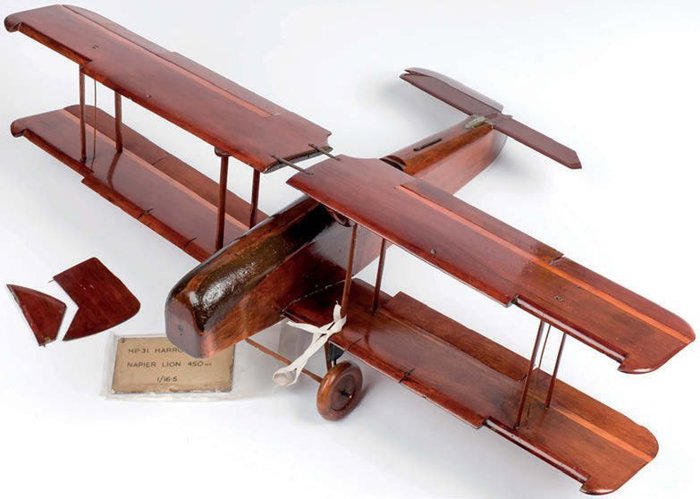
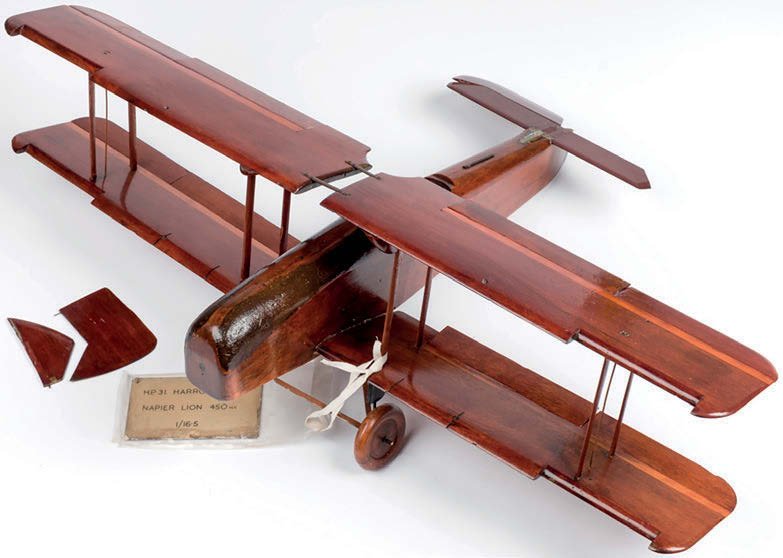
1920s mahogany wind tunnel model of a HP.31 1926 Napier Lion, £800
Another Handley Page item, a 1920s mahogany wind tunnel model of a HP.31 1926 Napier Lion biplane, 2ft 8in (82cm) wingspan, 23in (59cm) long, 1/16.5 scale, sold at £800 (guide £200-300).
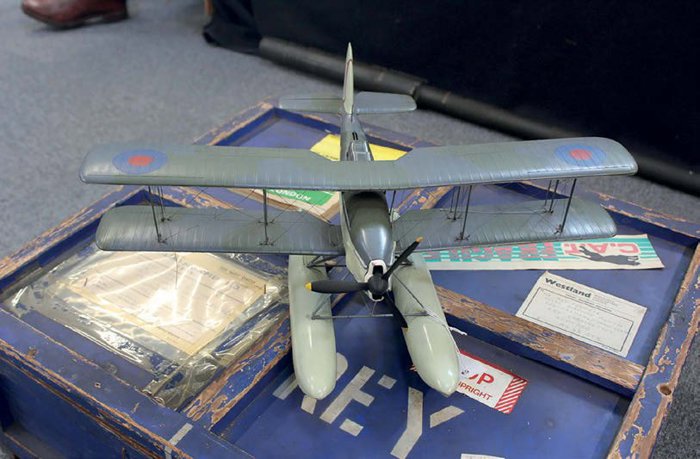
Exhibition model of a Fairey Seafox K 8613, £1400
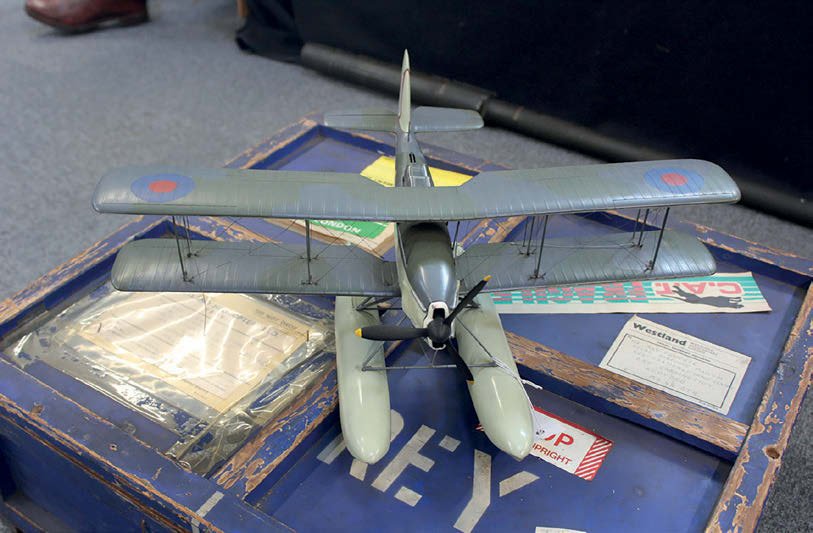
These basic wind tunnel models fared better generally than more finished examples intended for display, although a “fine exhibition model” of a Fairey Seafox K 8613, built by Dagra Co c.1945, made £1400 (estimate £600-800).
This detailed wooden 1/24 scale model, finished in green and grey camouflage with RAF roundels, 19½in (50cm) wingspan, 15½in (40cm) long, was presented in original blue painted wooden transport with various labels including Westland Helicopters Ltd, Yeovil. An original card by the The Fairey Aviation Company Ltd was inscribed in ink giving the history of the model – ranging from Paris Exhibition and Naval Engineering College Devonport to Stockport Civic Exhibition – from 1945-72 when it was presented to the RAF Museum.
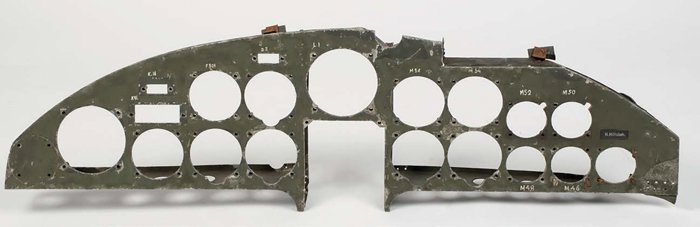
Second World War Luftwaffe Heinkel He III instrument panel, £3200
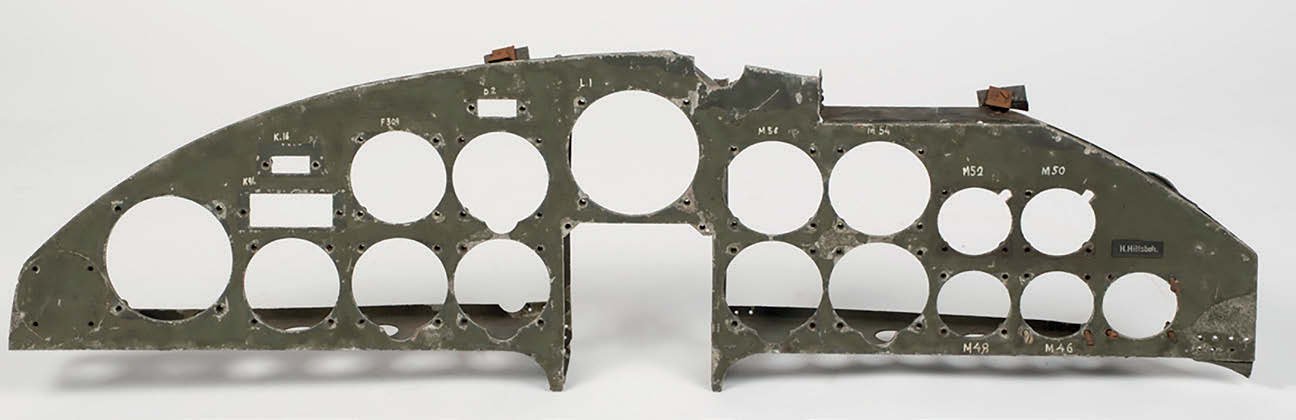
Aside from the models, a notable RAF Museum lot took the form of a Second World War Luftwaffe Heinkel He III instrument panel, finished in the standard green with plaque inscribed H. Hilfsbeh, with apertures for instruments, many categorised in white paint. Estimated at £200-300, the 3ft 1in (94.5cm) long panel hammered at £3200.
Sold at £2300 was a large piece of First World War German lozenge aircraft fabric, one side painted with a Balkan Cross, the other with a lozenge design, 2ft 4in x 2ft 4in (70 x 70cm) outside the period oak frame.
Finance and flying
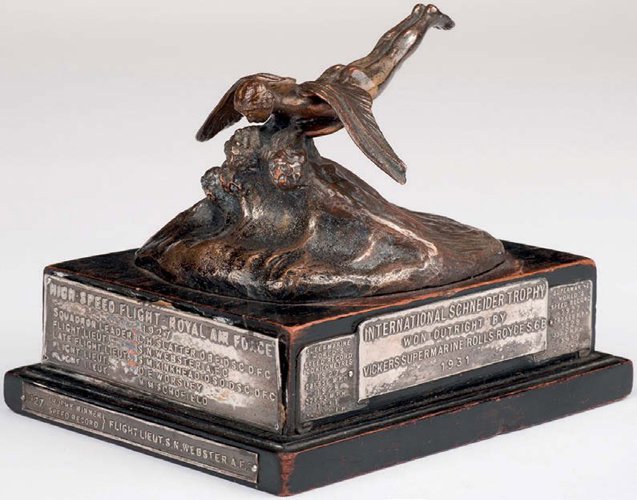
Silver-plated Schneider Trophy miniature, £7500
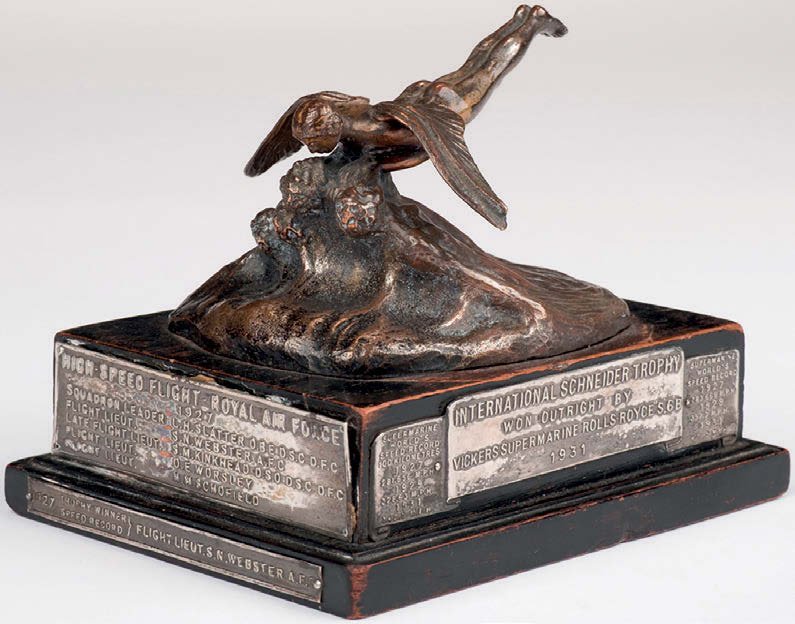
Elsewhere in the South Cerney auction, another aviation theme lot to catch the eye was a silver-plated Schneider Trophy miniature, mounted on an ebonised plinth applied with nine silver-plated plaques recording the International Schneider Trophy winners, World’s Speed Record holders and Royal Air Force High-Speed Flight members, variously dated 1927-31. The 4½in (11cm) high trophy with “general wear commensurate with age” was presented to Hugh Henry Duvall and came to auction through by family descent.
Duvall served during First World War with the Royal Fusiliers before being commissioned as a lieutenant with the Leicestershire Regiment. The saleroom said: “It is unclear what role Duvall played in the Schneider Trophy contest, but it is thought he was an accountant for the British."
‘Star of the team’ or not, this trophy miniature took £7500 (estimate £3000-5000).
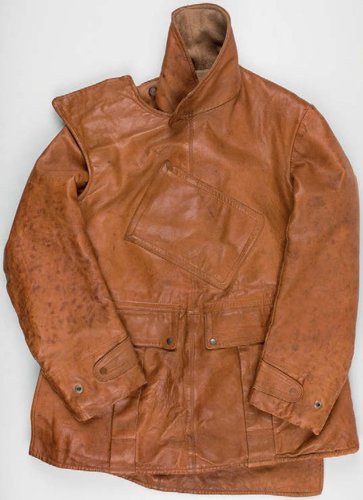
First World War Royal Flying Corps pilot’s leather flying coat, £2800
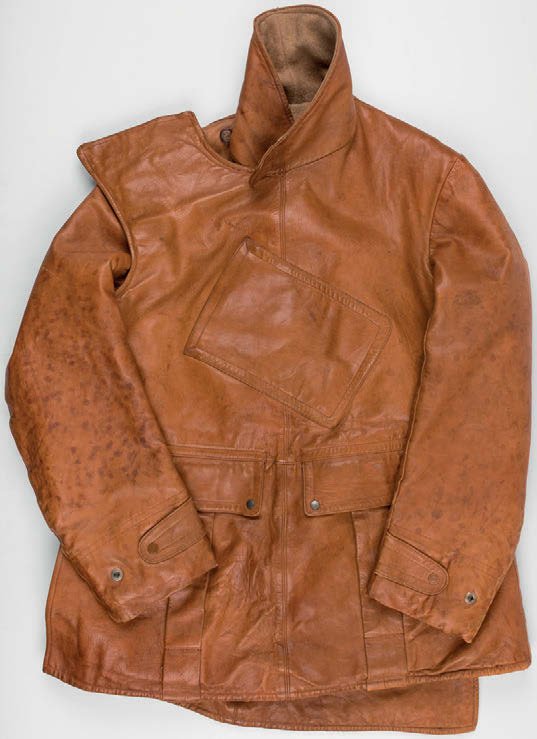
A Royal Flying Corps pilot’s leather flying coat, soft brown leather with diagonal pocket for a navigational map, oversized pockets with pop studs, horn of composite buttons, wool lining with inner pocket, came with an interesting provenance to “The Hon. Patrick Lindsay (1928-86), head of the Old Masters Department, Christie’s and aviation and motoring enthusiast”.
On June 2, Dreweatts dispersed the contents of the London home furnished by Lindsay and his wife, a distinguished interior decorator. This RFC coat sold at £2800 (guide £700-1000).
Fighter to vet
An imperial German naval officer’s presentation sword belonging to Theodor Johannes Wilhelm Baustaedt (1884-1948) and then by family descent hammered at a surprise £5800 when pitched at £700-1000.
Baustaedt was a German naval officer who fought in the First World War and was awarded the Iron Cross, Bronze Cross and Turkish Medal.
He became unhappy with the direction of German politics and left the navy for a happier career as a vet in Wernigerode.