Musical Manuscripts & Autographs
Highlights from 28 January Auction
In an exciting development for collectors, scholars, and music institutions worldwide, the full score of William Walton’s monumental choral work Belshazzar’s Feast has been placed on the market. This represents an opportunity to acquire one of the most iconic and influential British compositions of the twentieth century, renowned for its dramatic power, rhythmic brilliance, and innovative orchestration.
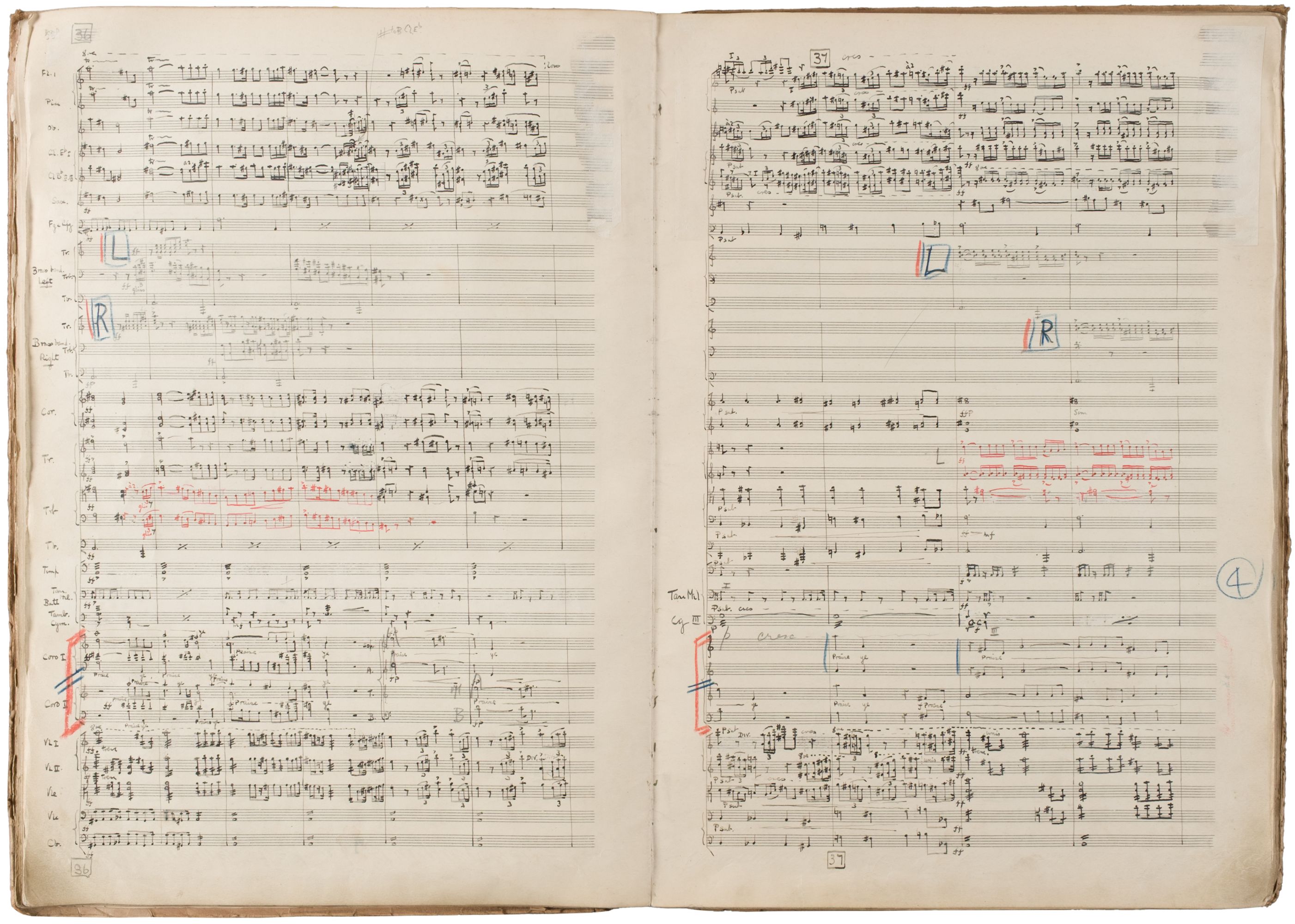
First performed in 1931, Belshazzar’s Feast quickly established Walton as a leading voice of his generation. The piece is celebrated for its bold fusion of biblical narrative, modern harmonies, and the huge forces involved in a performance including double chorus, baritone soloist, expanded brass, and an extensive percussion section. The score vividly captures the intensity and spectacle of the story that depicts the downfall of the Babylonian king Belshazzar.
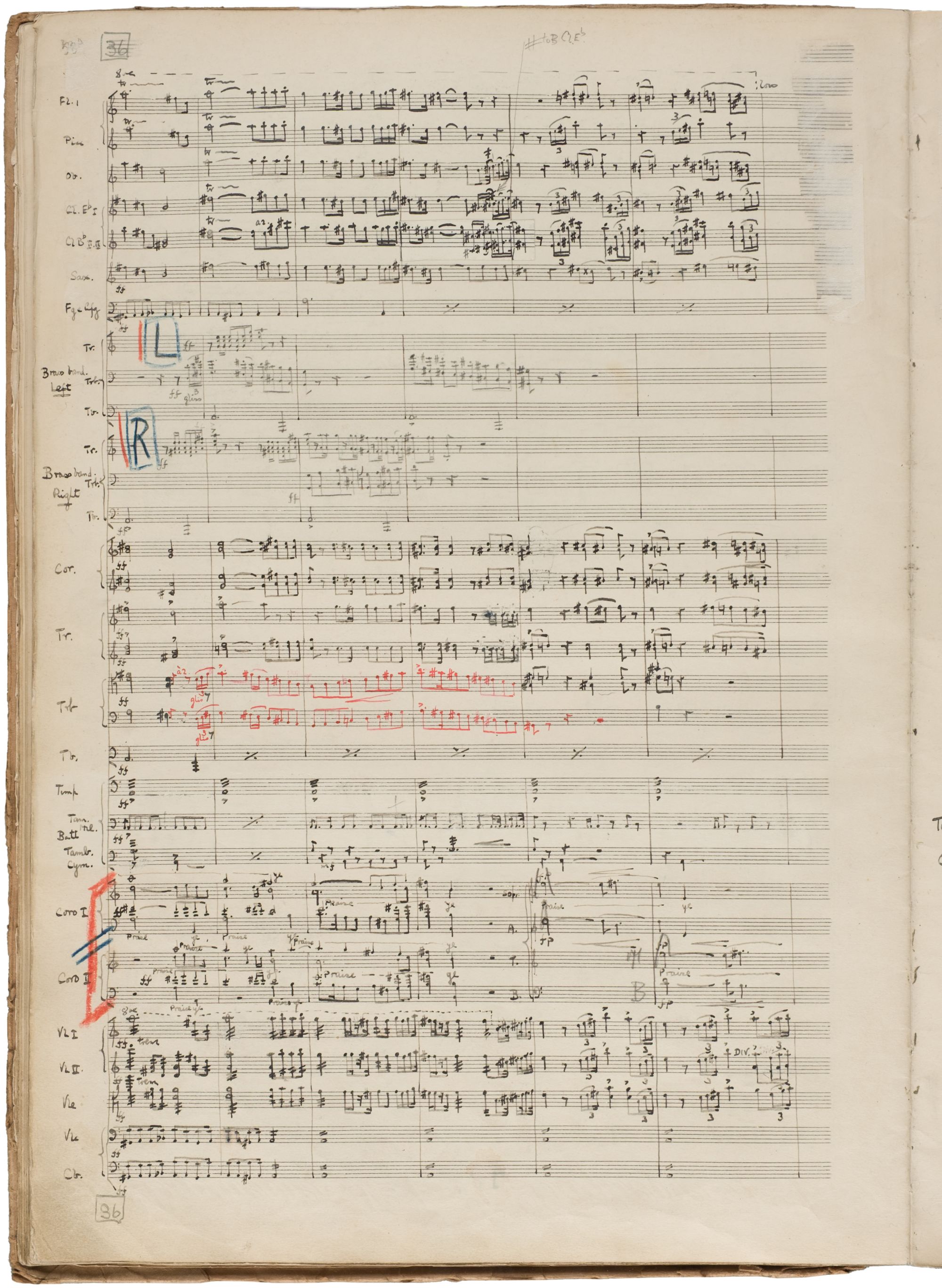
During the 1930s and 1940s, the autograph score was used (as was the custom at that time) as a hire copy and has many heavy blue and red pencil markings probably in the hand of Malcolm Sargent who conducted the first performance. Throughout the score are many additions and amendments in the composer’s hand providing a complete and authoritative representation of Walton’s intentions. This is a ‘working copy’ and thus of great historical significance and also enduring artistic value for orchestras, conservatories, libraries, and private collectors alike.
‘This is a unique moment for any admirer of Walton’s music,’ said Chris Albury of rare books and manuscript specialists Dominic Winter Auctioneers in Cirencester. ‘Belshazzar’s Feast is a cornerstone of British choral literature, and access to a full score of this quality is exceedingly rare. We anticipate strong interest from institutions and individuals who recognise both its musical brilliance and its cultural importance.’ The score will be sold at auction on 28 January.
The sale also features other musical offerings, including original manuscript scores of less famous composers Charles Griffes, Henry Gadsby and Max Vogrich, as well as two miniature scores signed by Edward Elgar, and an extremely rare copy of the first edition of an important treatise on the baroque guitar by the Sicilian guitarist and priest Don Antonino di Micheli, published in Palermo in 1680.
Upcoming Auctions

Printed Books & Maps, Travel & Atlases, The Thornhill Shropshire Collection
13th May, 2026 10:00